
Product range · manufacturer in India
Pulp Molding & Shredder Machine Manufacturer in India
Machines for preparing recovered material and finishing molded fibre products, from dual shaft shredding to hydraulic hot pressing.
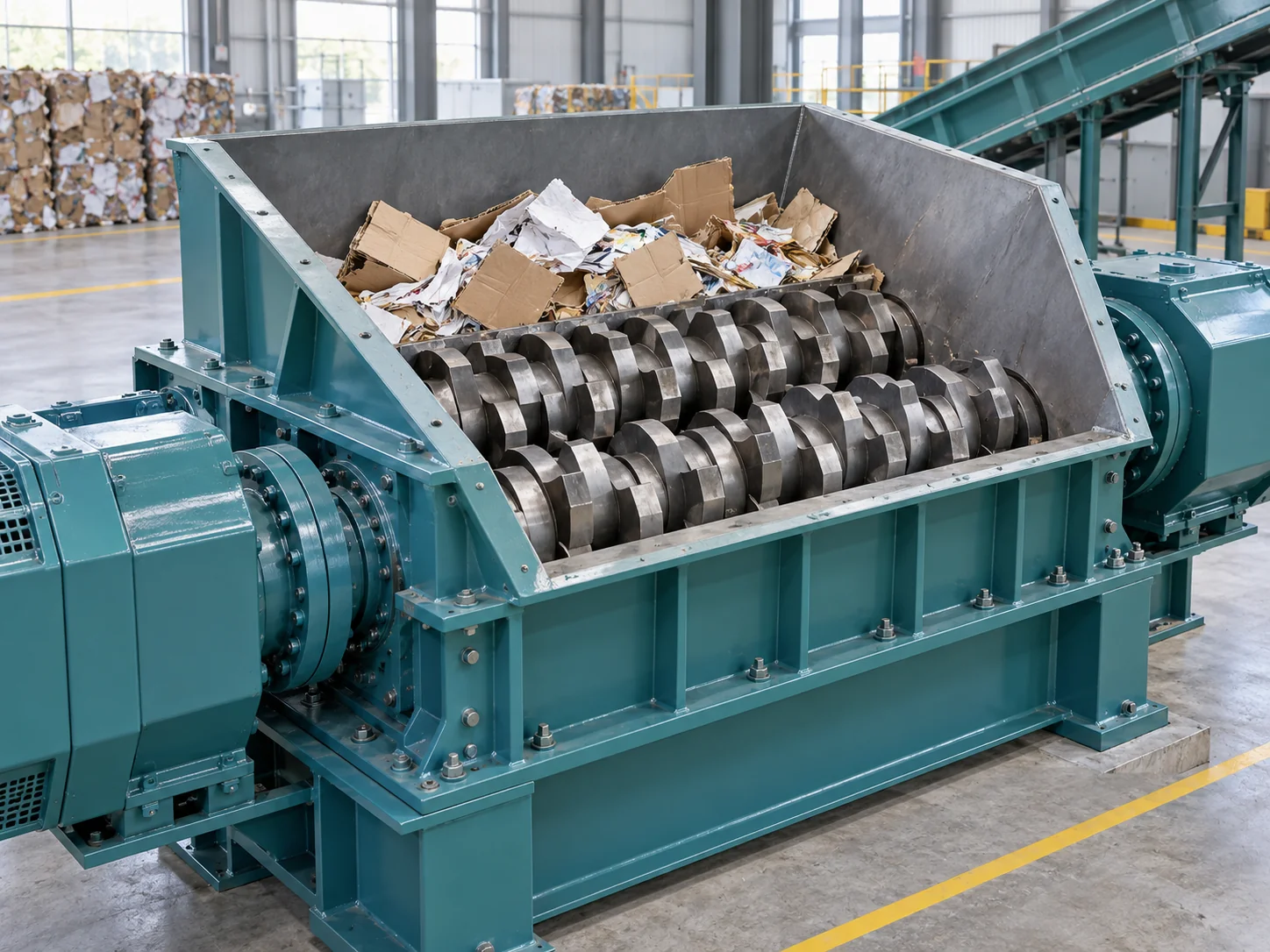 Representative imagery
Machines in this range
Explore the
equipment.
2 machines in this range. Select a machine to review its available details, then tell us your material and capacity for a tailored quotation.
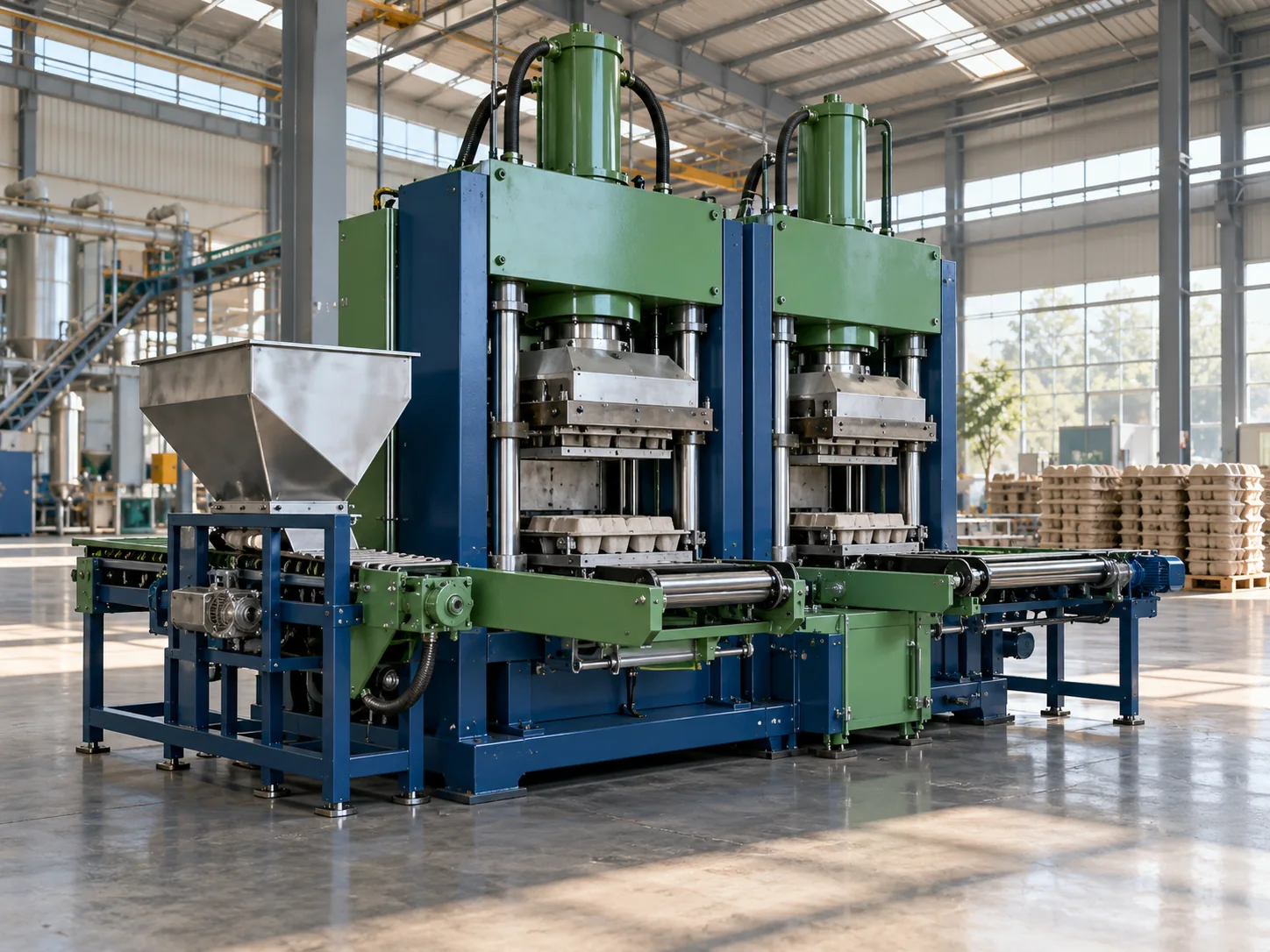 Double Station Hydraulic Hot Press MachineDouble station hydraulic hot press machine for precision shaping and densification of pulp molded products.View details02
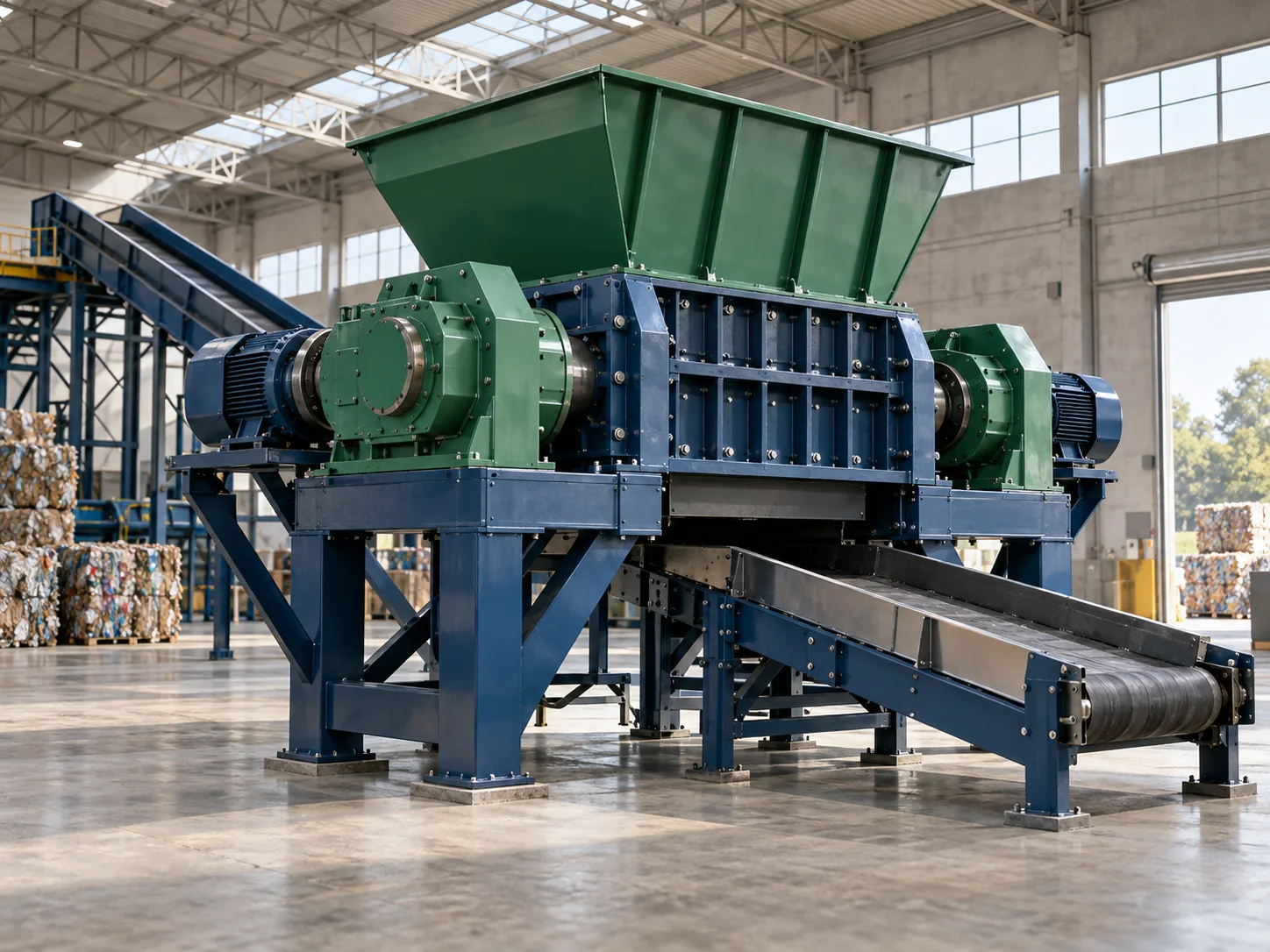 Dual Shaft Shredder MachineHeavy-duty dual shaft shredder machine for paper waste, cardboard, plastic scrap, packaging waste and recyclable materials.View details
 ABOUT THIS RANGE
Pulp Molding & Shredder Machine Manufacturer in India
MEW Machines manufactures pulp molding and shredder machines for paper recycling plants, molded fiber packaging units, egg tray production, food packaging, industrial packaging and sustainable product manufacturing. These machines help convert waste paper, cardboard and recyclable fiber materials into useful molded products with reliable processing, forming and finishing performance.
Our pulp molding and shredding solutions suit businesses that need durable machinery for raw material preparation, pulp processing, molded fiber product manufacturing and recycling. Each machine can be supplied with project-specific capacity, motor power, heating arrangement, control system and mold compatibility.
Applications
Important Machinery
Why Choose MEW Machines
Molded Pulp Products in India after the Single-Use Plastic Ban
From 1 July 2022, India banned the manufacture, sale and use of identified single-use plastic items, including plastic plates, cups, glasses, cutlery, straws, trays, stirrers, thermocol for decoration and wrapping films around sweet boxes. Caterers, sweet shops, canteens, event organisers, street-food vendors and food delivery kitchens all needed alternatives, and molded pulp plates, bowls, trays and containers made from bagasse or paper pulp are among the most widely used.
That shift created room for new molded pulp manufacturers across India. This section explains what they make, where the fibre comes from, and how our hot press and shredder fit into a molded pulp plant.
What Indian molded pulp units make
- Food service: round and compartment plates, bowls and trays for weddings, events, canteens and temples.
- Food delivery: containers and trays for cloud kitchens and restaurants.
- Agricultural packaging: egg trays and fruit trays.
- Industrial packaging: protective inserts for electronics, bottle trays and end caps that replace thermocol.
Raw material in India
India is one of the world’s largest sugarcane producers, and sugar mills in Uttar Pradesh, Maharashtra, Karnataka and Tamil Nadu produce bagasse every crushing season. Bagasse pulp is one of the most common fibres for food-contact tableware. Wheat and rice straw from Punjab and Haryana, bamboo, and banana fibre are also used. Waste paper pulp is cheaper and suits egg trays and industrial packaging, but most food-contact producers use virgin fibre such as bagasse or bamboo pulp.
Where our machines fit in the process
| Stage | Machine | What it does |
|---|---|---|
| Raw material preparation | Dual shaft shredder | Breaks cardboard, paper cores and molded rejects into small pieces for faster pulping |
| Pulping | Hydro pulper and beater | Turns fibre into an even slurry |
| Forming | Tableware pulp molding machine | Forms plates, bowls and trays on moulds |
| Hot pressing | Double station hydraulic hot press | Dries, shapes and densifies each piece for a smooth, firm, accurate product |
| Recycling rejects | Dual shaft shredder | Returns trimmings and rejects to the pulper, so little fibre is wasted |
Why the hot press matters for tableware
A formed plate straight off the mould is soft and uneven. The hydraulic hot press presses it between heated moulds, driving out moisture and giving the smooth surface, rigid edge and exact dimensions that caterers and retailers expect. A double station press lets one station load while the other presses, so the forming machine never waits. For food-service products, press quality is what separates a premium plate from a cheap one.
Setting up a molded pulp unit in India
- Power: three-phase 415V. Tableware machines with electrically heated moulds draw significant load (our tableware molding machine is rated at 50 kW), so check your sanctioned load early.
- Water: used in pulping and forming; plan a settling tank to reuse it.
- Space: clean, covered production space. Food-contact products should be made and packed away from dust and raw material storage.
- Food-contact rules: check the FSSAI packaging requirements and the BIS standards that apply to your products before you launch, and keep test reports for large buyers.
- Approvals: Udyam and GST registration, and State Pollution Control Board consent.
Finance and support schemes
Molded pulp units that replace banned plastic items fit well with the aims of many state industrial and environment policies, and small units can use PMEGP, MUDRA or bank term loans. Ask your District Industries Centre which capital or interest subsidies apply in your state.
Delivery and service across India
We build in Jaipur and deliver by road to any state. Lead times run from about 90 days for a tableware molding machine to 4–6 months for an automatic line. We guide installation and first production, and moulds for new products can be made as your range grows.
Selling molded tableware in India
Most units sell through distributors and wholesale disposable-goods traders, who supply caterers, sweet shops, canteens, event managers and street-food vendors. Large buyers such as restaurant chains, cloud kitchens and institutional canteens buy direct, but ask for consistent quality, printed test reports and reliable delivery. Wedding and festival seasons bring demand peaks, so plan stock ahead of them.
Planning products and moulds
Each product needs its own mould, and every mould change costs production time. Most new units start with two or three fast-moving items, for example a round plate, a compartment plate and a bowl, and add containers and trays once they have buyers. Tell us your first products and we will size the forming and pressing capacity around them.
Quality buyers check
- Strength: a plate must hold a full meal without bending.
- Finish: a smooth, clean surface and firm edge, which the hot press gives.
- Resistance to oil and water: for hot and oily Indian food, producers use food-safe additives in the pulp; check what your food-contact rules allow.
- Hygiene: clean production and sealed packing.
Mistakes to avoid
- Launching food-contact products without checking FSSAI and BIS requirements.
- Too many products at the start, with constant mould changes.
- Underestimating heating load on the electricity sanction.
- Relying on one fibre supplier through the sugar mill off-season.
How many pieces a day?
| Line | Output per hour | Output per 8-hour shift |
|---|---|---|
| Tableware molding machine | About 1,200 plates (20 per minute) | About 9,600 plates |
| Pulp moulding machine, 4 moulds | 600 pieces | About 4,800 pieces |
| Automatic pulp moulding line | 1,500–1,800 pieces | About 12,000–14,400 pieces |
Shift figures are running output; mould changes and downtime reduce them. Match the hot press capacity to the forming output so neither machine waits for the other.
Bagasse supply through the year
Sugar mills crush cane mainly from around November to April, so fresh bagasse is plentiful in that season and scarcer after it. Many tableware makers buy bagasse pulp board, which stores well, and keep several weeks of stock to ride through the off-season. If you plan to pulp raw bagasse yourself, agree supply with a nearby mill before you order equipment.
Branding and packing your tableware
Moulds can be made with a simple embossed logo or pattern, which helps a brand stand out with distributors and bulk buyers; ask us when you order moulds. Finished pieces are usually counted into stacks, shrink-wrapped or sleeved, and packed in cartons with your brand, product size and food-contact information. Clean, well-labelled packing matters as much as the plate itself when you sell to restaurant chains and institutional kitchens.
What decides the cost
We quote every line to your products and output, so we don’t publish a fixed price. The products you want to make, the number of moulds, the forming and pressing capacity, the heating system and the pulp preparation decide the cost. Tell us your products, daily output and fibre, and we will send a machine list and layout.
FAQs
Are molded pulp plates allowed after India’s plastic ban?
Yes. The July 2022 ban covers identified single-use plastic items such as plastic plates, cups, cutlery, straws and trays. Molded pulp plates made from bagasse or paper pulp are a common alternative. Check the FSSAI and BIS requirements for food-contact products.
Which raw material is best for pulp molding in India?
Bagasse from sugar mills is widely used for food-contact tableware; waste paper pulp suits egg trays and industrial packaging. We size the pulp preparation to the fibre you choose.
What materials can the dual shaft shredder process?
It can process waste paper, cardboard, corrugated boxes, paper cores, molded fiber rejects, plastic scrap, packaging waste, textile waste and similar recyclable materials.
What is the use of a hydraulic hot press in pulp molding?
A hydraulic hot press improves the shape, strength, surface finish and dimensional accuracy of molded fiber products after forming.
Can the machines be customized?
Yes. Machine capacity, pressure range, motor power, control system, heating method, blade configuration and mold compatibility can be customized as per production requirements.
Do you provide machines for complete pulp molding projects?
MEW Machines can support buyers with equipment selection for raw material preparation, pulp processing, forming, hot pressing and finishing.
Discuss your requirements
Plan your Pulp Molding & Shredder Machine project.
Share the material you process and the output you need for a tailored quotation.